FLOX
- Product Design
- Prototype
- Arduino
- Electronics

Sep. 2010 - Feb. 2011
Set of playful interactive building elements developed during the Minor Interactive Environments. Final prototypes have been part of an exposition in the Delft Science Centre.
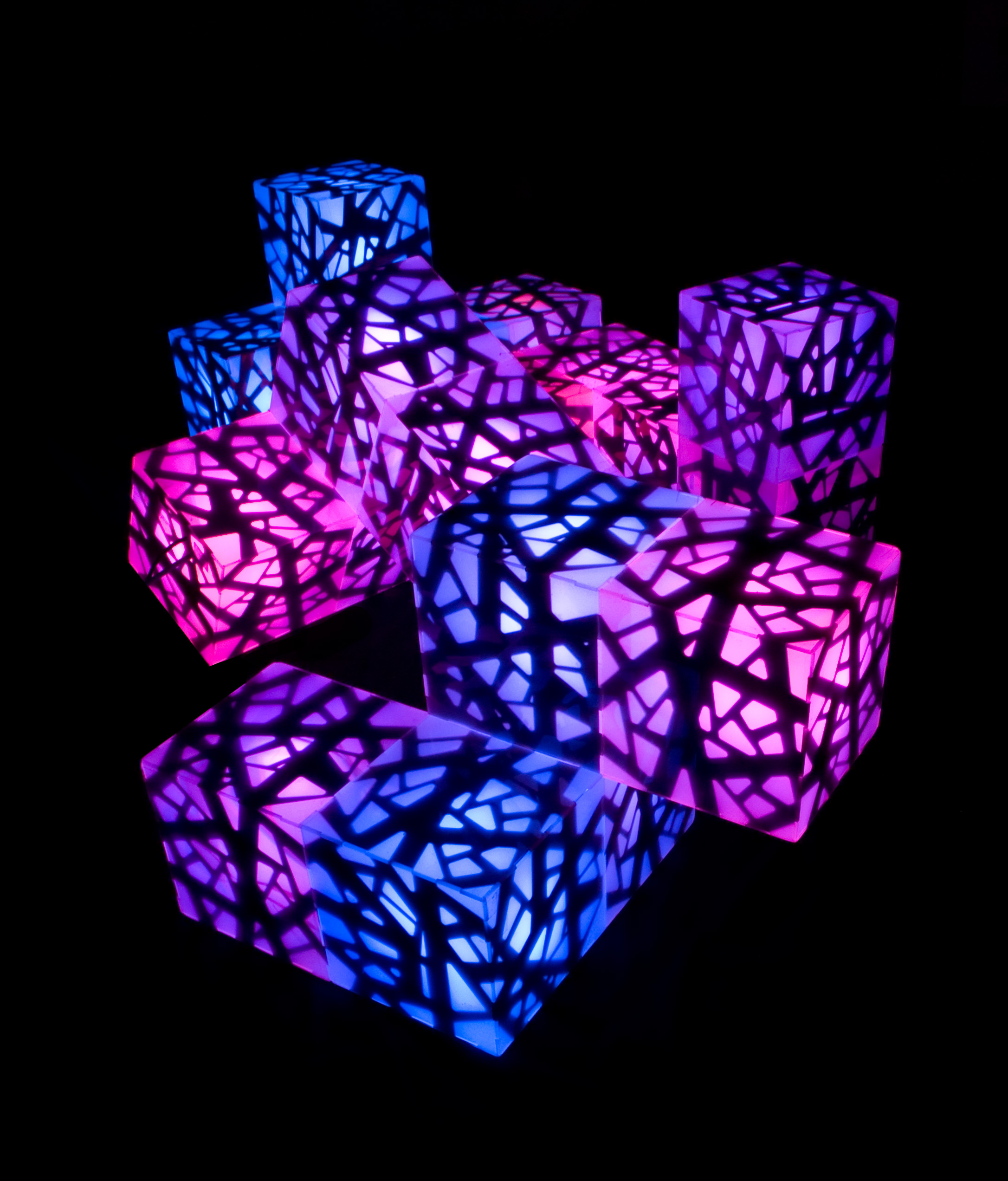
The FLOX are a swarm of intelligent components that allow children to create their own spaces in (semi-)public environments. Elements can easily be picked up and joined with others to generate many fascinating shapes. The real magic, however, comes from within, The hull of a FLOX is in fact an exoskeleton for a creature of light that can be seen radiating through its own superstructure. FLOX use their light to communicate with the user and react to the interactive process of (re-)assembling and consequently using of a structure. Acting like a swarm, they guide, stimulate and reward their users throughout this process by producing rich displays of coloured light.

The FLOX go through multiple states of activity in reaction to presence and activity of users. With these reactions the FLOX communicate, an invitation to come play with them.
Dormant
They fall asleep when they are not played with.
Perceptive
They are aware of the user, and ready to be played with. In the perceptive state the FLOX start to 'flock'. Flocking is a behaviour where the individual blocks fade through a range of colours around a certain average colour. This average colour is determined and communicated between the individual blocks, making the entire group part of this behaviour.
Moving
Only one of the segments lights up depending on how the block is oriented. The light can be moved through the block by rotating it.
Cohabitation
A strong contrasting colours appears beneath the user when they sit on the blocks for a longer period of time.
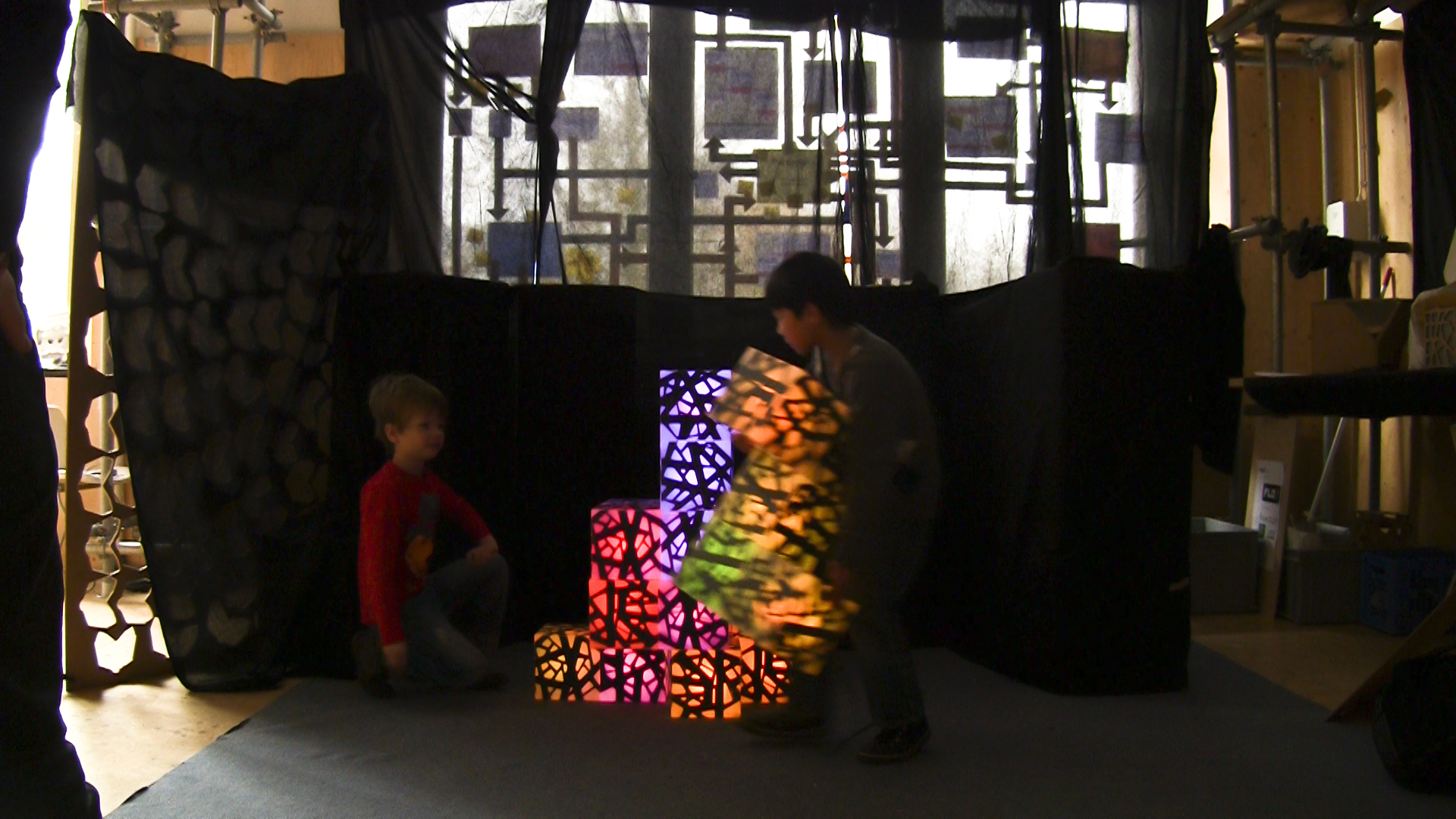
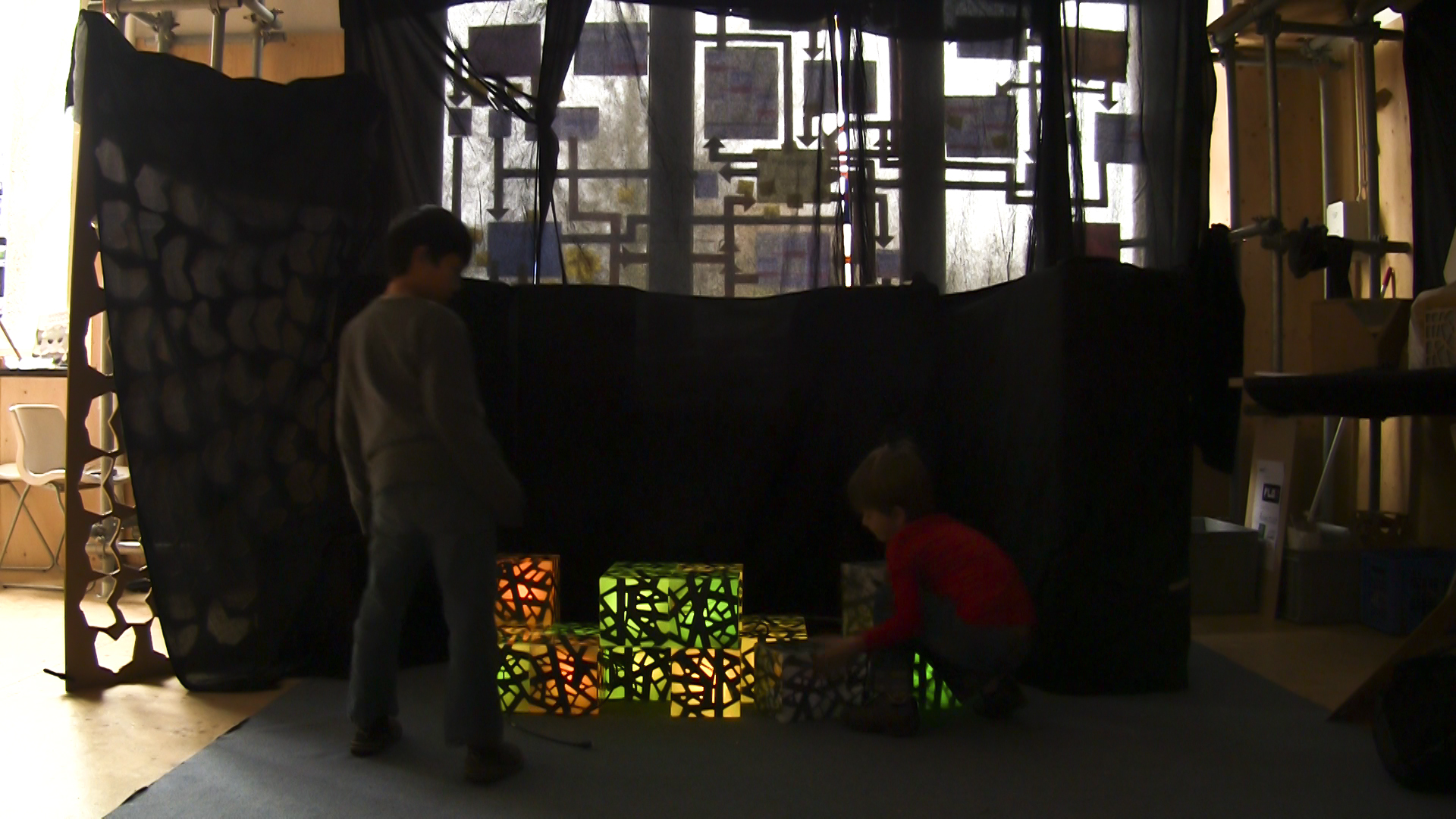
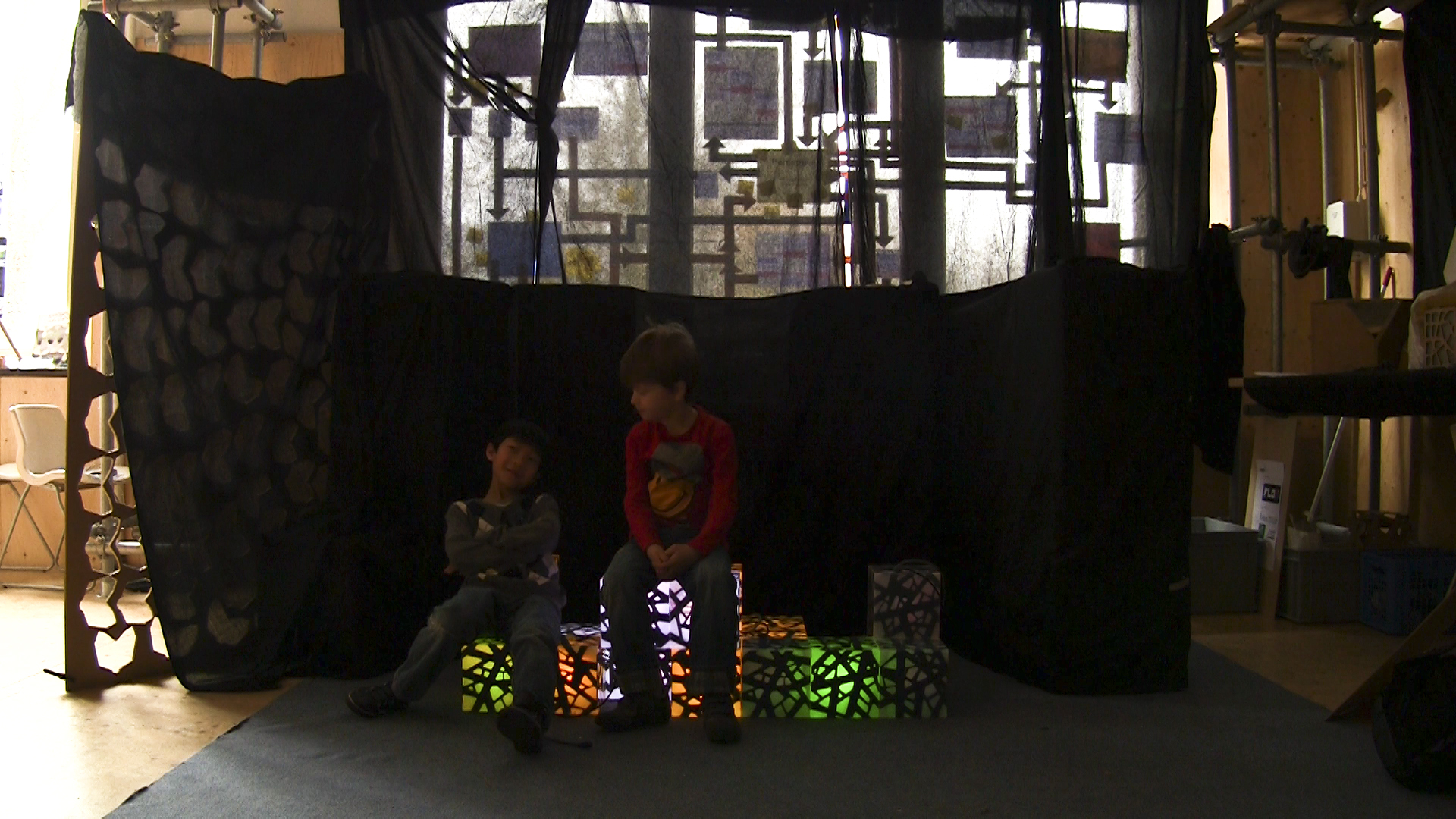
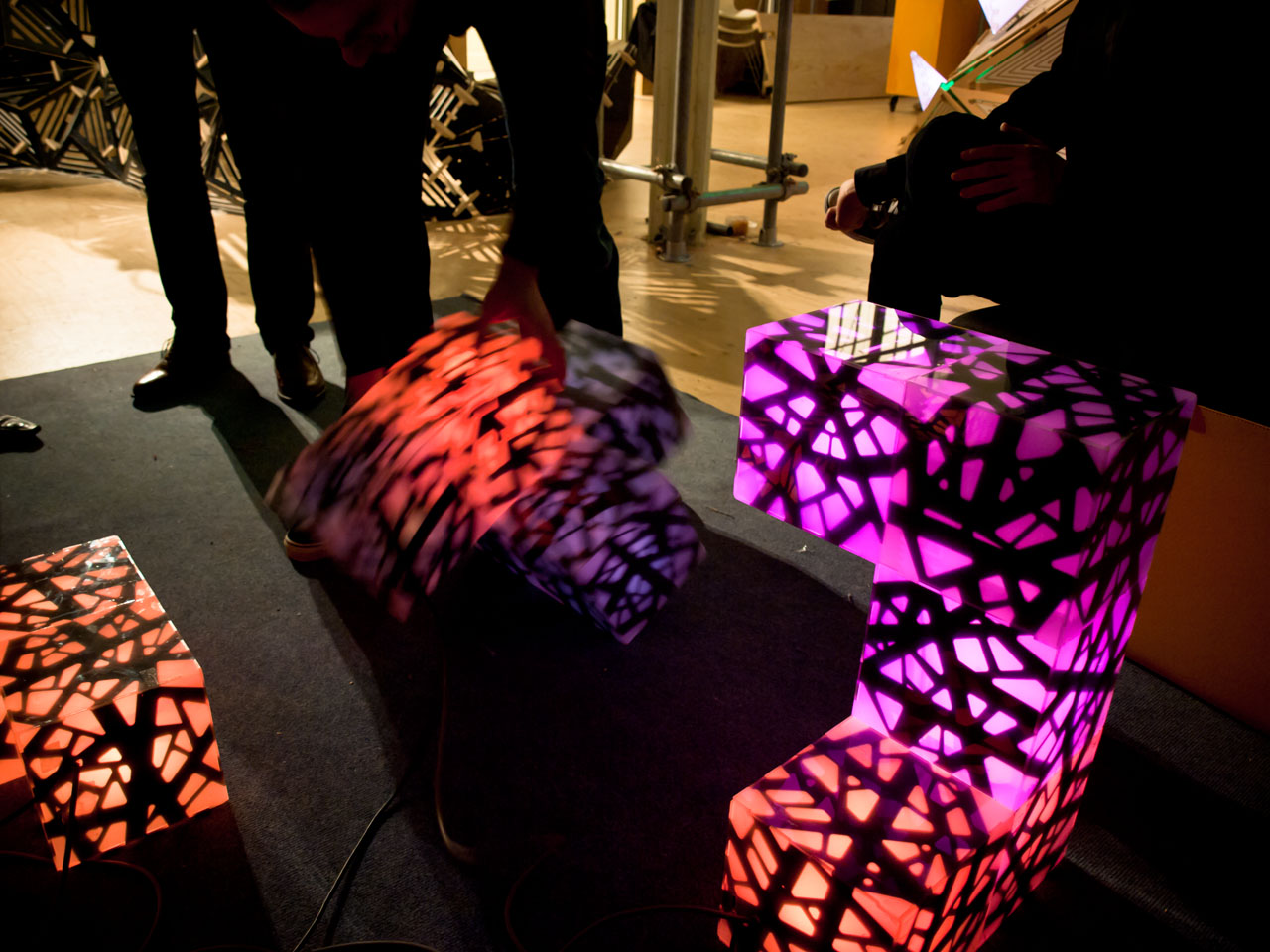
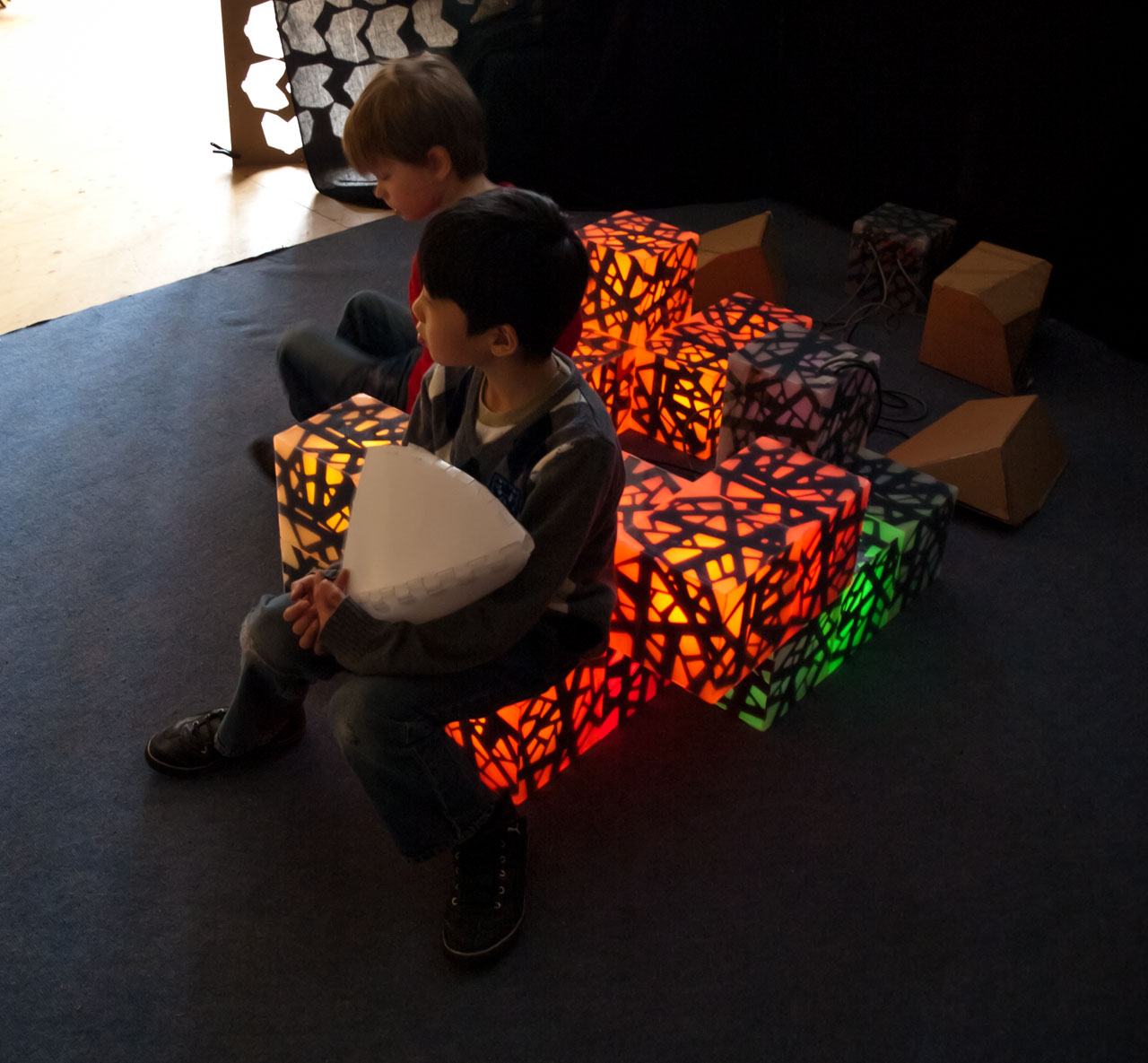
Testing & Early Prototypes
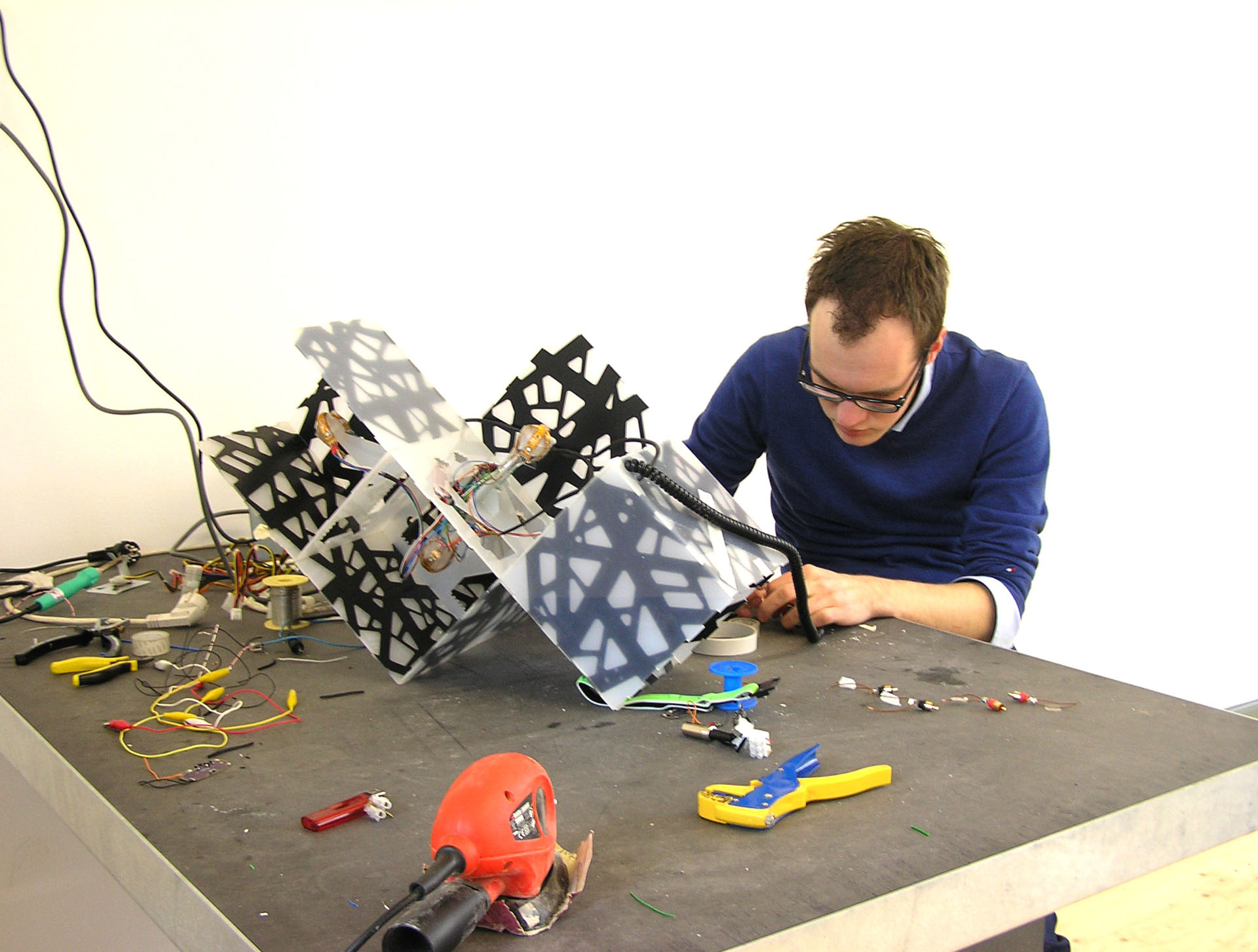
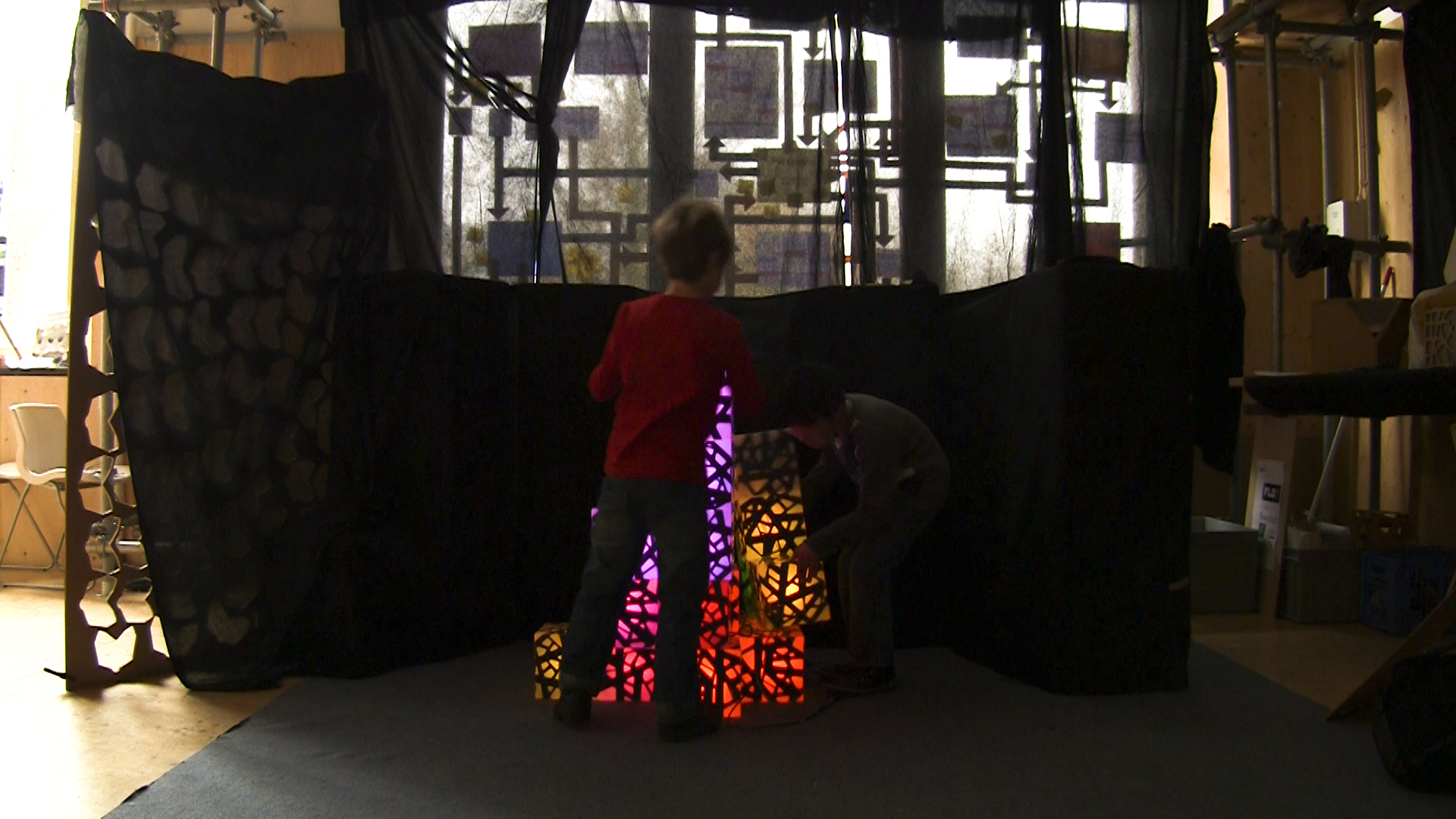
Throughout the process we've created many different types of prototypes, getting more advanced as we progressed. Our knowledge was limited, so there was a lot of trial and error. The pre-final prototype was used to test the prototype with children in the DOK Library in Delft. We were situated there for 4 days, testing and adjusting the prototype.
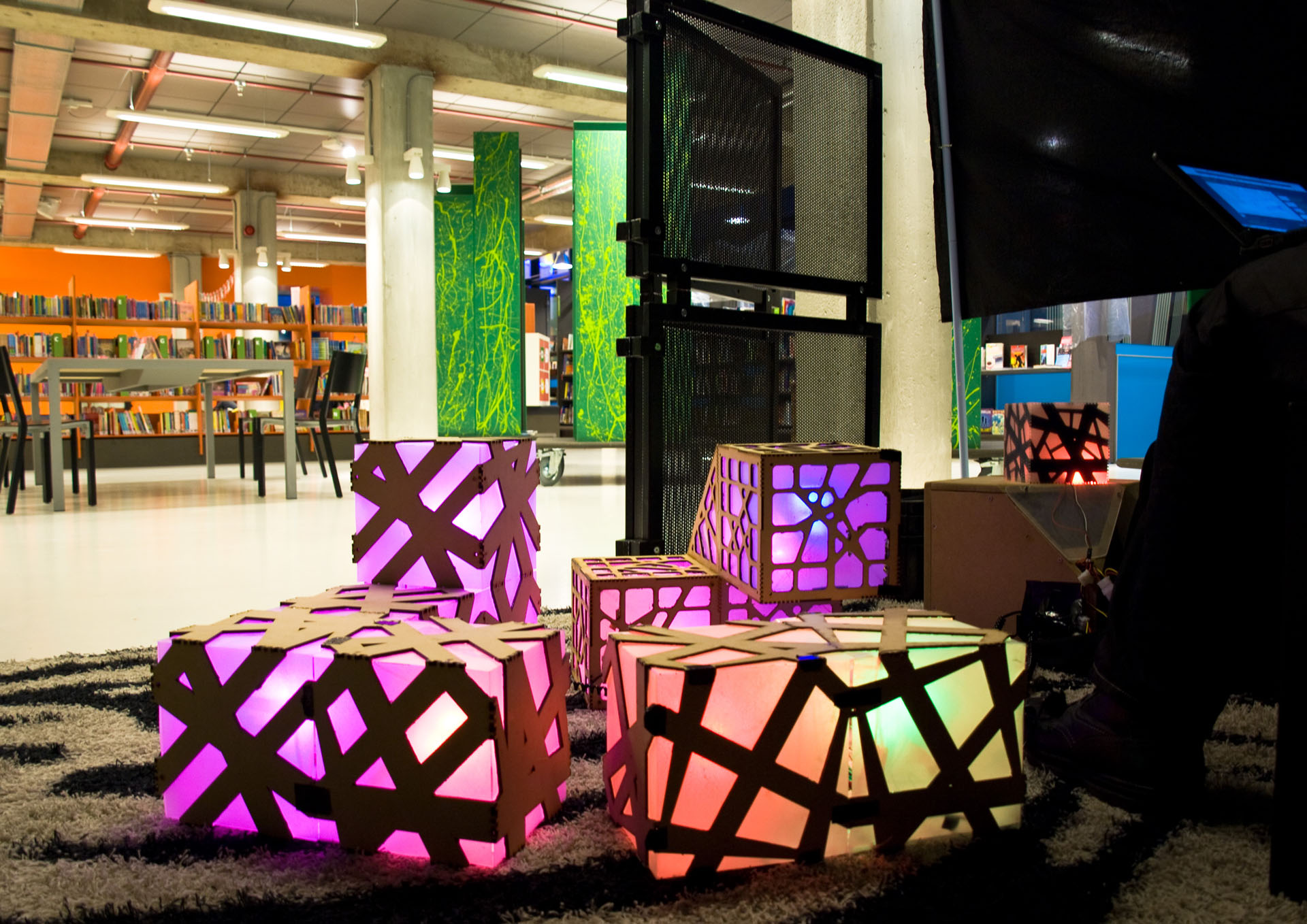

Electronics
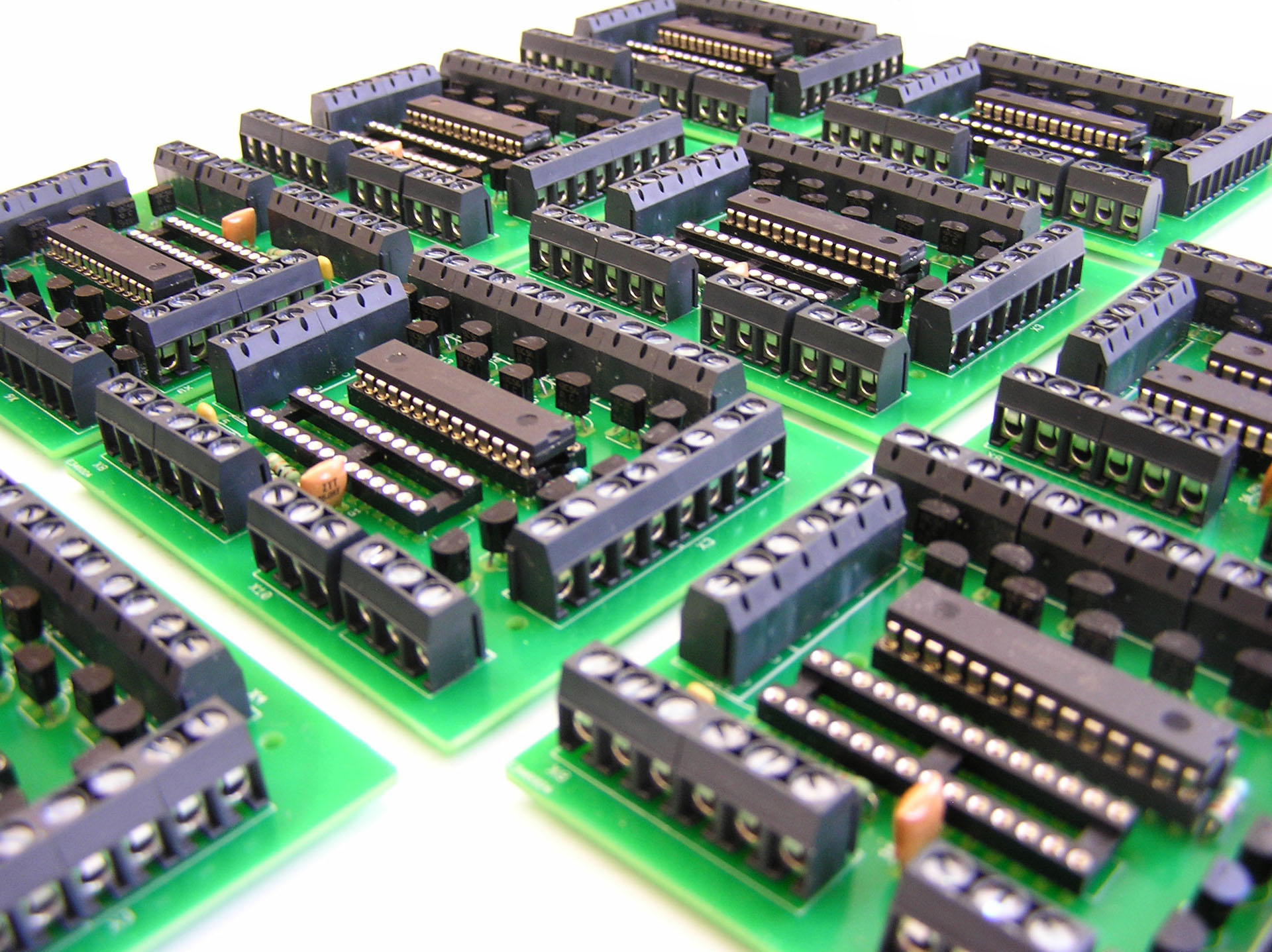
For the FLOX we developed our own circuit board based on the Arduino platform. It consists of an Atmega chip combined with a TI TLC5940NT to control LED's. Each element is furthermore equipped with an accelerometer (motion), proximity (capacitive, user presence), and an XBee (for wireless communication between elements).